

Image by Lara John from Unsplash.
I am such a baby, a wimp. I whine and complain, moan and groan. Why? Because I’ve lived without electricity at my home since Super-typhoon Sinlaku, April 13. More than 100 days without the comforts of power. No refrigerator. No oven or microwave. No kitchen appliances like toaster and coffee grinder. No washer and dryer at home. No air conditioning in the hottest time of the year in the tropics. No charging my phone. No flipping the switch for lights. No hot water heater. No computer use at home.
These are inconveniences. They disrupt my daily life. I have to remember each morning to set out the solar lanterns to recharge. I have to go out to plug in my phone at work or a restaurant or neighbor’s house. I am either eating canned food, or buying fresh food every day or eating out. I have to use the Laundromat, collecting quarters between each session. I need to change the batteries often in my little fans and string lights that help with comfort just a little. I take cold showers in the middle of the day, when it’s hot outside, rather than early morning or nighttime showering when I would find it too cold for my aging bones.
All of this is annoying. It pushes me into places I don’t want to be. It limits my freedom and control over my own life.
On top of that, today, I’m feeling sick. My throat is sore. But it’s too hot to stay home, and it’s the last Saturday of the month. So I sit here, at Herman’s Modern Bakery, with a pot of tea. I’ve already drunk a glass of orange juice and eaten some food. But I really just want to lie down and sleep in my own air conditioned bedroom. But I have no power at home. No ice cubes to put into cold orange juice. No dehumidifier to help with the tropical climate.
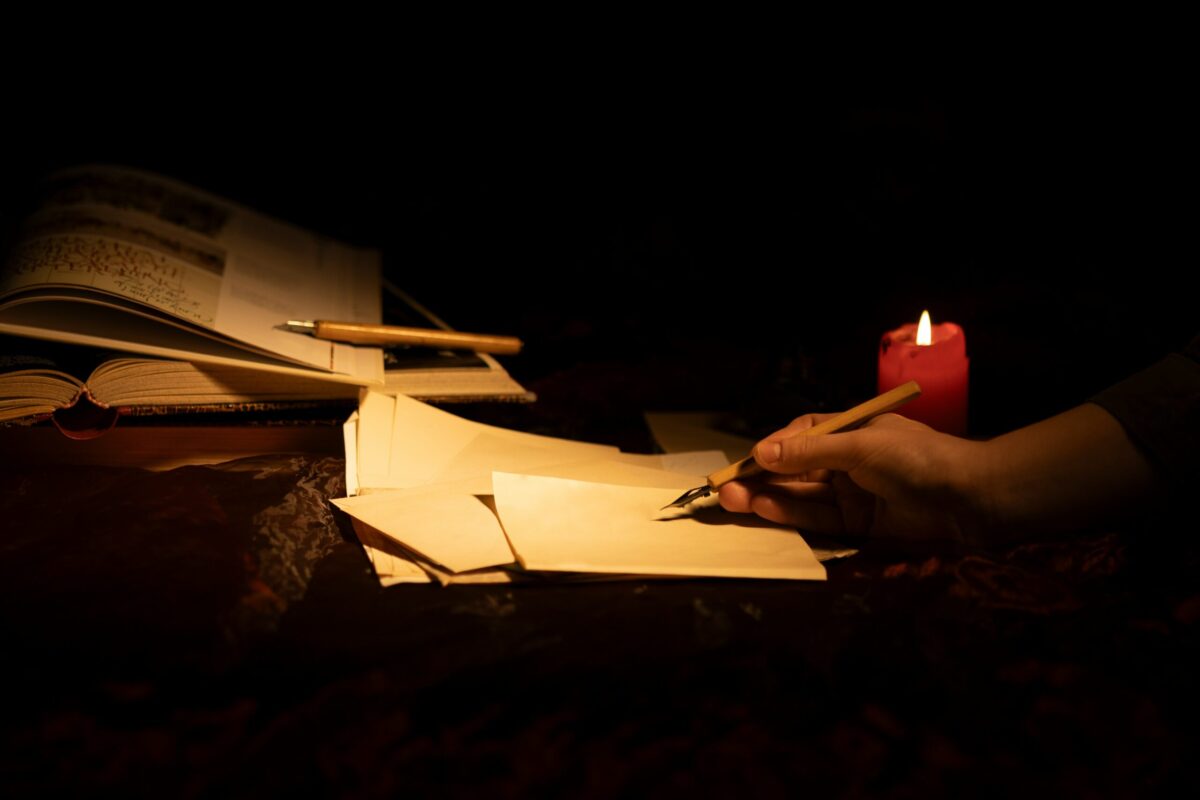
And then I think of writers throughout the ages who did not have electricity. They managed. Writers creating magnificent, time-honored works that we still read today. Saint Paul and his letters to the Romans, letters to the Corinthians, letters to the … Homer with the Iliad and Odyssey, preserving Greek culture. Miguel de Cervantes with his man of La Mancha. Shakespeare writing plays and sonnets, creating new words and phrases, influencing our lives for centuries. Jane Austen proving women can write. The Bronte sisters. Charles Dickens. Trollope. Edgar Allan Poe. Novelists without electricity.
And my little sore throat, soothed with juice, tea and honey, seems so picayune. We have the diaries of so many people writing during their worst times: a Civil War man imprisoned in a southern jail, the only one of 127 men in his company to survive, while the others died of dysentery, other diseases, and starvation. Anne Frank and Elie Wiesel, writing during their imprisonments in Nazi concentration camps. Nelson Mandela writing from jail. The Japanese woman who went diving off Palau and got separated from her group. They couldn’t find her. She wrote for 4 days on a pad while she bobbed alone on the ocean surface. They found her body after she died, along with her last written thoughts.
We have war correspondents who risk death and torture, and write from the front lines, amid noise and smoke and pain and agony and hunger and thirst. We have impoverished writers who coped without food and warmth, or like Anais Nin, wrote porn and sold their souls to survive.
There are writers right this minute all over the world dealing with dreadful situations. Real medical conditions that limit their physical and mental strength. Writing through pain. Writing through poverty. Writing with political threats, family disapproval, or societal disapprobation hanging over their heads.
And so my complaints—100+ days without power, a sore throat—are miniscule. I am a baby, a wimp. .Writing my complaints, but also now thinking of all those who write and have written in the circumstances of their times, facing the challenges and writing despite or because of them.